
1kg Gold Bar Seller: The Investor's Complete Guide
If you're considering a serious allocation to physical gold, one question keeps coming up: what size bar? Too small, and premiums eat into your hedge. Too large, and you're priced out or facing institutional minimums. A 1kg gold bar occupies a unique sweet spot — it's the Goldilocks format of precious metals investing.
A 1kg bar is exactly 1000 grams (32.151 troy ounces) of 999.9 fine gold, currently worth approximately $146,000–$149,000 USD at spot prices. It's substantial enough to feel meaningful as a real investment, accessible enough that serious retail investors can own 5–10 bars without hitting multimillion-dollar portfolio commitments, and institutional enough to trade on professional markets, qualify for LBMA Good Delivery certification, and vault in regulated facilities worldwide. This guide covers everything you need to know about buying, owning, and managing 1kg gold bars in 2026.

Why 1kg Bars Dominate the Investment Market
The 1kg format has become the de facto standard for serious retail gold investors, not by accident but because it solves real problems:
- Affordability with meaning. At roughly $147,000 per bar (May 2026 spot + premiums), a 1kg purchase is expensive but accessible to serious investors—no institutional capital required. An investor comfortable with a $150k allocation might own 3–5 bars ($450k–$750k); that same investor can't practically buy institutional 10kg bars.
- Institutional eligibility. A 1kg bar qualifies for LBMA Good Delivery certification, unlocking access to professional vaulting (Brink's, Loomis, London Bullion Market vaults) and direct trading on the London spot market. The 1kg bar is the bridge—legitimate institutional collateral, but affordable for retail accumulation.
- Best-in-class liquidity for retail. Dealers repurchase 1kg bars within hours at tight spreads (0.5–1.5% below spot). A 100g bar typically trades at 2–3% spread; a 10kg bar requires institutional dealers and 1–2 weeks to settle.
- Meaningful value tracking. A 1kg bar = exactly 32.151 troy ounces. At current spot ($4,553/oz), each bar represents ~$146,000 of gold value. If gold rallies $100/oz, your bar gains $3,215 in value—a trackable, meaningful metric.
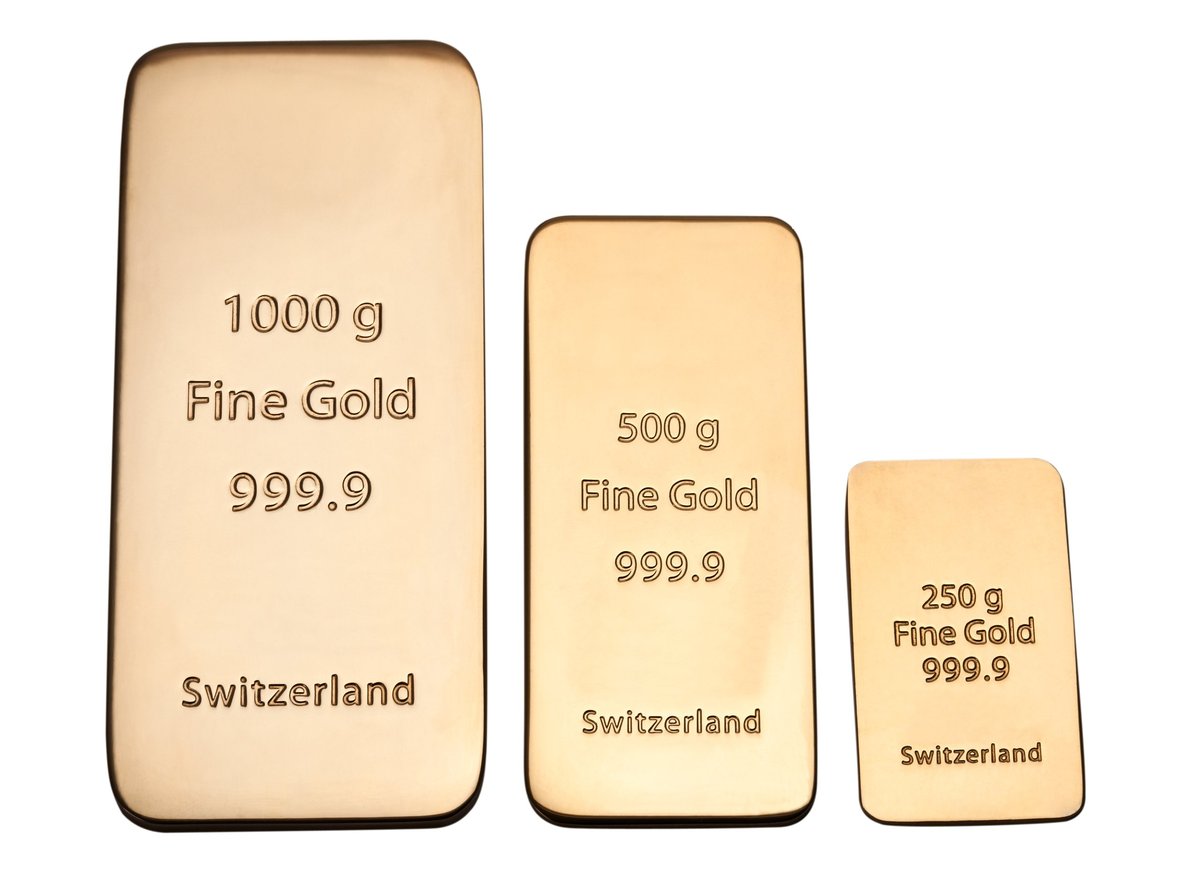
Gold bar sizes and premiums: 1kg offers the optimal balance of size, affordability, and institutional eligibility.
Specifications and Quality Standards
Not all 1kg bars are created equal. Understanding the standards separates legitimate investment-grade bullion from risky purchases.
Physical Specs
A standard cast 1kg bar measures 55mm (length) × 28mm (width) × 12mm (thickness) and weighs exactly 1000 grams (32.151 troy ounces). Minted bars vary slightly by manufacturer but maintain the same weight.
Purity: 999.9 Fine Gold
Investment-grade 1kg bars are 999.9 fine—99.99% pure gold. The remaining 0.01% (roughly 0.1 grams) consists of trace impurities like silver, copper, or other metals introduced during refining. This purity level is the LBMA standard and makes bars eligible for professional vaulting and trading.
LBMA Good Delivery Certification
The London Bullion Market Association certifies bars that meet strict weight (950–1050g tolerance), purity (999.9 minimum), and dimensional standards. A certified bar comes with an assay certificate from a recognized assayer—the credential that unlocks professional market access.
Cast vs. Minted: Which to Buy?
Cast bars (poured and cooled) cost less—premiums run 2–3% over spot. They have a textured, unique surface due to the cooling process. Each bar looks slightly different.
Minted bars (pressed under high pressure) cost slightly more—premiums run 3–5%. They have a uniform, polished appearance and stack neatly. Collectors often prefer the aesthetics; serious investors typically prioritize cast bars' lower premiums.

Market Overview: Who Buys 1kg Bars and Why
Understanding demand helps explain why 1kg bars command tight premiums and strong resale liquidity:
- 50–60% comes from retail precious metals investors viewing gold as a long-term store of value or hedge against currency devaluation. These buyers typically allocate 5–15% of their portfolio to physical gold.
- 20–25% comes from high-net-worth individuals and family offices managing $100k–$1M+ in precious metals. A 1kg bar is accessible in scale yet large enough to move the needle on a $500k+ gold position.
- The remaining demand comes from collectors, small businesses holding gold as operational reserves, and institutional buyers. Global 1kg bar sales are estimated at $1.5–2.8 billion annually.
Pricing Breakdown: What You Actually Pay
Understanding the components of a 1kg bar's total cost is critical for comparing dealer quotes and evaluating whether you're getting a fair price.
At current spot prices (May 17, 2026), gold trades at approximately $4,553.35 per troy ounce AM / $4,528 PM. A 1kg bar equals 32.151 troy ounces, meaning the pure gold content is worth:
- At AM spot ($4,553.35): ~$146,297
- At PM spot ($4,528): ~$145,613
But you don't pay just spot. Here's what a typical retail 1kg bar quote breaks down to:
| Spot gold value (32.151 oz) | ~$145,600–$146,300 | Fluctuates hourly with LBMA pricing |
| Refiner markup | $400–$800 (0.3–0.6%) | PAMP, Valcambi, Perth Mint premium |
| Dealer margin | $800–$2,000 (0.5–1.5%) | Retail spread, inventory cost |
| Assay certificate (if new) | $5–$20 | Third-party verification |
| Packaging & insurance | $50–$150 | Tamper-evident, secure transit |
| Shipping (within US) | $0–$50 | Often free on $10k+ orders |
| Total retail price | ~$148,000–$149,500 | 1–2% above spot |
Secondary-market 1kg bars (used, no new assay) trade at $147,000–$148,000—squeezing every basis point by skipping fresh certification. Institutional buyers at $250k+ minimums access wholesale pricing of spot + 0.5–1%, but only through dedicated vault accounts.
Key takeaway: A fair 1kg bar quote lands between spot + 1% (fintech vaults, bulk orders) and spot + 3% (retail dealers, single bars). Anything wider should trigger a red flag.
Where to Buy 1kg Bars: Dealers and Premiums
Retail Dealers (Best for First-Time Buyers)
JM Bullion (rated 4.8/5 on Shopper Approved, 425k+ reviews) and Silver Gold Bull (4.8/5+) are the market leaders for direct delivery. Both offer transparent pricing (spot + 1–3% premium on 1kg bars), free insured shipping on orders $10k+, and allocated vault storage options. Major refiners stocked: PAMP Suisse, Valcambi, Perth Mint.
Retail dealers ship insured bars via FedEx/UPS in 3–5 business days. Shipping is typically free on $10k+ orders; otherwise $25–50 within the US. International shipping runs $50–200 depending on destination country.
Fintech Platforms (Lower Premiums, Vault Custody)
Goldmoney and BullionVault offer allocated vault accounts (bars stored in London, Singapore, or Dubai) at premiums of 1.5–2.5%—tighter than retail. You own the gold; the vault operator merely stores it. You can sell fractional amounts or entire bars within hours via their platforms.
Annual vault fees run $10–20 per bar and include insurance. The trade-off: you don't hold the physical bar, but you eliminate shipping risk and pay lower ongoing costs.
Institutional Vaults (Wholesale Pricing, High Minimums)
Brink's and Loomis offer wholesale pricing (spot + 0.5–1.5%) but require $250k–$1M minimums. If you're accumulating a multi-million-dollar precious metals position, institutional vaults unlock dramatically tighter premiums and professional-grade custody.
| Channel | Premium | Best for | Annual Cost |
|---|---|---|---|
| Retail (direct delivery) | 1–3% | First-time buyers, home storage | None (or safe: $50–300/yr) |
| Fintech vaults | 1.5–2.5% | Allocated storage, fractional selling | $10–20 per bar |
| Institutional vaults | 0.5–1.5% | $250k+ portfolios, professional custody | $50–100 per bar |
Storage, Insurance, and Tax Considerations
Owning gold is one thing; protecting it is another. Home storage via a bolted safe or safe-deposit box costs $50–300/year and carries counterparty risk. Many serious investors skip home storage entirely.
Allocated vault accounts cost $20–100 per bar annually and include professional insurance. Your gold sits in London, Singapore, Dubai, or Toronto—diversified, insured, and accessible to professional traders. If you need to liquidate, you contact your vault operator and sell within hours at market price.
On taxation: Bullion bars are taxed as collectibles in the US at a 28% long-term capital gains rate. The EU exempts bullion from VAT, but capital gains tax applies on resale (varies 20–45% by country). Consult a tax professional in your jurisdiction—tax treatment varies dramatically.
Authenticity: How to Verify a 1kg Bar Is Real
Counterfeits exist. Tungsten-filled bars (same weight as gold, different density) have fooled casual buyers. Protecting yourself requires systematic verification.
Verification Checklist
- Buy only from LBMA-listed dealers. The LBMA maintains a list of approved refiners and dealers. Verify your seller is registered; if not, walk away.
- Demand an assay certificate from an LBMA-recognized refiner. Top refiners: PAMP Suisse, Valcambi, Perth Mint, Royal Canadian Mint, Rand Refinery. The certificate must include: bar serial number, exact weight (1000g ±0.1g tolerance), purity (99.99% minimum), assayer signature, and date of assay. Verify the certificate serial number matches the bar's engraving.
- Request XRF (X-ray fluorescence) testing for non-destructive elemental verification. A legitimate 999.9 bar passes instantly; tungsten, palladium, and other substitutes are caught within seconds. Cost: $10–50 per bar from a certified lab.
- Measure weight and dimensions. Use a precision scale (±0.1g accuracy): Standard 1kg bar = exactly 1000g. Typical cast dimensions: 55mm (L) × 28mm (W) × 12mm (H). Tungsten-filled fakes weigh identically but have different density.
- Inspect visual security features. PAMP bars feature micro-engraved security holograms visible under magnification. Valcambi bars have razor-sharp edges (not rounded). Examine the bar under strong light.
Red Flags to Avoid
Price >3% below market
Why: Likely counterfeit or heavily discounted (credit card churn scam)
Action: Compare with 3+ dealers first
No assay certificate (for new bars)
Why: Can't verify weight/purity independently
Action: Request certificate before buying
Bars not in original manufacturer packaging
Why: Easier to pass counterfeits
Action: Request factory photos before purchase
Dealer has no LBMA accreditation
Why: Possible unlicensed operation
Action: Do not purchase
Bars without visible serial numbers
Why: Can't match to assay certificate
Action: Walk away
Seller demands wire payment only, no escrow
Why: Sign of fraud; no buyer protection
Action: Stick to credit cards or escrow services
Finding Your 1kg Gold Bar Supplier
The dealer you choose affects not just the premium you pay upfront, but your entire experience—from delivery verification to resale liquidity down the line. The best suppliers combine three things:
- Transparent pricing with itemized premiums (no hidden fees or opaque "best price" quotes)
- LBMA-accredited refiners with professional assay and certification
- Responsive support and authentic expertise (not high-pressure sales)
Why Sterling Ore Solutions Stands Out
Sterling Ore Solutions has built a reputation as a trusted precious metals supplier—operating with the same discipline and documentation standards you'd expect from institutional dealers, but serving retail investors directly. Here's what they deliver on 1kg bars:
- Certified authenticity. Every bar ships with certificate of authenticity and professional XRF testing—non-destructive elemental verification that tungsten-filled fakes or purity gaps are caught instantly. They source exclusively from LBMA-recognized refiners, so every bar qualifies for Good Delivery trading.
- Transparent, competitive pricing. No mystery premiums. They quote spot + itemized refiner/refining costs. Volume buyers access tiered discounts ($10k, $50k, $100k, $250k, $500k, $1M+), so the more you commit, the tighter the pricing.
- Secure global delivery. Insured, tracked shipping with full chain-of-custody documentation. Customer support via phone, WhatsApp, and live chat—available for questions about specs, storage strategy, or market conditions.
For serious accumulating, they offer wholesale relationships. Direct access to ethically sourced gold at institutional pricing. If you're building a multi-bar position, this is where economies of scale land.
Request a quote from Sterling Ore Solutions on 1kg bars and compare their pricing and documentation against other dealers. The 20–30 minutes spent comparing will save you thousands in fair execution.
The Bottom Line
The 1kg gold bar format is not the smallest or the largest—it's the sweet spot. It offers serious retail investors a path to meaningful precious metals exposure without institutional capital requirements or the liquidity challenges of smaller fractional bars. The key to success is knowing what to look for: transparent premiums, certified authenticity, institutional-grade sourcing, and dealers who stand behind their product.
Whether you're taking your first swing at 1kg bars or accumulating a serious allocation, the fundamentals remain the same: demand transparency, verify authenticity, understand the pricing breakdown, and choose dealers who align with professional standards. In an era of currency uncertainty and geopolitical volatility, a properly sourced, authenticated 1kg bar is one of the most practical, liquid expressions of physical gold ownership available to retail investors.