
Copper Cathode and Industrial Metals Market Forecast
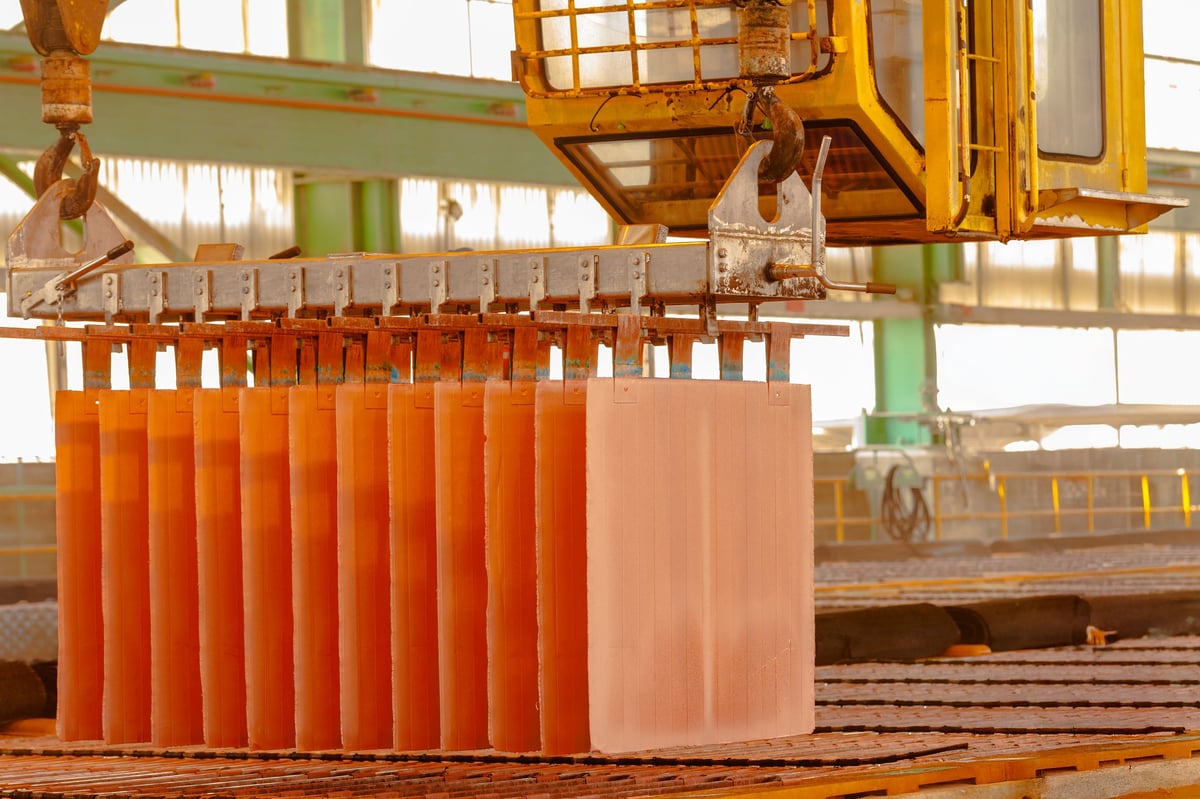
Global copper cathode markets are entering a period of sustained structural deficit. Supply constraints from aging mines, declining ore grades, and underinvestment in new production capacity are converging with surging demand from electrification, grid modernization, and data center construction. This forecast examines the supply-demand dynamics that will shape copper cathode pricing through 2028 and what institutional buyers should expect.
The Supply-Side Squeeze: Why Copper Production Can't Keep Up
Global copper mine production grew just 2.1% in 2025 against a 4.3% increase in refined demand — a gap that widened to over 400,000 metric tonnes. The International Copper Study Group (ICSG) projects this deficit will persist through at least 2028, driven by structural rather than cyclical factors.
Aging mines are the primary culprit. The average copper mine in operation today is over 50 years old. Chile's Codelco — the world's largest producer — saw output decline for a third consecutive year in 2025 as ore grades at Chuquicamata and El Teniente continued to deteriorate. Peru's Las Bambas and Antamina face similar geological realities: shallower, higher-grade deposits are exhausted, and deeper extraction means higher costs per tonne.
New projects are not filling the gap. Copper mines take 15-20 years from discovery to production. Despite elevated prices, the pipeline of greenfield projects reaching construction phase remains thin. Bureaucratic permitting delays in Chile, community opposition in Peru, and political risk in the DRC and Zambia have extended timelines across every major copper jurisdiction. The result is a supply trajectory that cannot meet the demand curve now forming.
Cathode Premiums Are Signaling Structural Tightness
One of the clearest indicators of market stress is the behavior of cathode premiums — the surcharge above LME cash settlement that buyers pay for physical delivery. In Q1 2026, CIF Rotterdam premiums for grade-A copper cathode reached $185-210 per tonne, up from $120-145 in early 2025. Shanghai bonded warehouse premiums have moved in parallel, reflecting tightness that is global rather than regional.
What distinguishes the current premium regime is its persistence. During previous cycles, elevated premiums attracted inventory and corrected within 2-3 quarters. Current premiums have remained above $150/tonne for four consecutive quarters, signaling that the usual rebalancing mechanisms are not functioning. Physical traders report that cathode lots of 500-1000 tonnes are being allocated rather than freely traded, a pattern last seen during the 2006-2008 super-cycle.
Demand Drivers: Three Megatrends Converging
While supply struggles, three demand vectors are accelerating simultaneously:
Electrification and the energy transition. An electric vehicle contains 80-85 kg of copper — roughly 4x the copper content of an internal combustion vehicle. With global EV production crossing 25 million units in 2025 and projected to reach 40 million by 2028, automotive copper demand alone adds approximately 800,000 tonnes of annual consumption. Charging infrastructure, battery storage systems, and renewable generation (solar farms use 5 tonnes of copper per MW) compound this demand.
Grid modernization. Aging transmission and distribution infrastructure across North America and Europe requires comprehensive replacement. The U.S. Department of Energy estimates that 70% of the nation's transmission lines are over 25 years old. Grid modernization projects consume copper at rates 3-5x higher than the infrastructure they replace, as modern transformers, switchgear, and underground cable systems are copper-intensive by design.
Data center construction. The AI buildout is a copper story. A single hyperscale data center contains 15,000-25,000 tonnes of copper across power distribution, busbars, grounding systems, and cooling infrastructure. With global data center capacity projected to double by 2028, this sector represents a net-new demand driver that did not exist at this scale five years ago.
Regional Dynamics: Africa's Growing Role
Africa's copper production is rising in significance as traditional producers struggle. The DRC overtook Peru as the world's second-largest copper producer in 2024, and Zambia's output is recovering as new investment flows into the Copperbelt. The Kamoa-Kakula complex in the DRC — a joint venture between Ivanhoe Mines and Zijin Mining — produced over 450,000 tonnes in 2025 and has a staged expansion target of 800,000 tonnes annually.
However, African copper faces logistics bottlenecks. The primary export route from the DRC Copperbelt runs through Zambia to Durban or Dar es Salaam — a corridor that experiences intermittent congestion, border delays, and infrastructure constraints. Buyers sourcing African cathode should factor in 14-21 days of logistics buffer beyond standard shipping times and maintain relationships with logistics partners who have in-country operational presence.
Refining capacity is another constraint. While the DRC has successfully attracted mine investment, smelter and refinery capacity lags. Much of DRC-origin concentrate is processed in China under tolling agreements, adding a processing link to an already extended supply chain. New refining capacity at Lualaba and Kolwezi is under construction but will not materially impact cathode availability until 2027-2028.
Price Outlook: The Case for Sustained Elevation
LME 3-month copper traded in a $8,500-9,200/tonne range through most of 2025 before breaking above $10,200 in Q1 2026. Our trading desk sees a base case of $10,500-11,500 through H2 2026, with a bull case above $13,000 if supply disruptions compound — a scenario that becomes more probable as inventory buffers thin.
The defining feature of the current market is the absence of the release valve that has capped previous rallies: visible inventory. Total LME and SHFE warehouse stocks represent less than 6 days of global consumption, well below the 10-12 day buffer that typically moderates price spikes. Exchange stocks declined for seven consecutive quarters through Q1 2026, and while a restocking cycle is possible, the underlying deficit means any inventory rebuild will be slow and partial.
What This Means for Institutional Buyers
Industrial consumers and manufacturers sourcing physical copper cathode should evaluate their procurement strategies against this backdrop. Forward curves in copper are in persistent backwardation — spot metal trades at a premium to future delivery dates — which penalizes just-in-time purchasing and rewards buyers who lock in term contracts with producers or approved LME-brand refiners.
Key recommendations from our trading desk:
- Secure 12-24 month cathode supply agreements with multiple producers to diversify logistical and geopolitical risk.
- Consider African cathode sources as a complement to Chilean and Peruvian supply, not a replacement — the logistics complexity is real but manageable with experienced partners.
- Evaluate toll refining arrangements for concentrate buyers as a way to bypass the cathode bottleneck, provided you have relationships with smelters in China, Japan, or Korea.
- Monitor the green premium emerging for low-carbon cathode (produced via SX-EW with renewable power), which is attracting premium pricing from EU manufacturers subject to CBAM compliance.
The Bottom Line
Copper cathode markets are not in a temporary spike — they are in a structural regime change. The combination of supply inelasticity, multi-vector demand growth, and depleted inventory buffers creates conditions that favor sustained elevated pricing through the medium term. Institutional buyers who move early on term supply agreements will secure both price certainty and physical availability; those who wait risk being priced out of spot markets during periods of acute tightness.
At Sterling Ore Solutions, our trading desk monitors cathode premiums, LME warehouse movements, and African logistics corridors in real time. For institutional buyers developing procurement strategies, our team can provide market color, producer introductions, and term-contract facilitation across the copper supply chain.
Disclaimer: This market forecast is for informational purposes only and does not constitute investment advice. Commodity markets involve substantial risk. Past performance and forward-looking projections are not guarantees of future results.
Navigate Copper Markets with Confidence
Sterling Ore Solutions provides institutional buyers with cathode procurement, toll refining facilitation, and real-time market intelligence on African and global copper supply chains.